
Most SEO content today sounds the same. Open five articles on almost any topic and you'll find the same structure, the same tips and the same safe conclusions.
SME-led content sounds different. When someone who actually does the work explains how they do it, you get details you won't find anywhere else: the workaround nobody documents, the mistake they made last year, the moment a "best practice" stopped working for them.
That's exactly why it works! And for brands that want to build trust through thought leadership in organic search, the advantage is already in-house. It's their people.
Why expertise matters more in search right now
Google's guidance on helpful, people-first content asks whether your content clearly demonstrates first-hand expertise and depth of knowledge, and whether it provides original information or analysis. That's very hard to fake with a generic AI draft.
It matters to buyers too. In the 2024 Edelman and LinkedIn B2B Thought Leadership Impact Report, 75% of decision-makers said a piece of thought leadership led them to research a product or service they hadn't been considering.
Working with subject matter experts is a win-win for everyone:
- Readers get advice they can actually trust
- Experts get a credible voice in their industry
- Brands get content that stands out
- And in my experience, the results speak for themselves
But, in my experience, getting SMEs to create content that actually performs doesn't happen by accident. Here's the process I follow.
The 6 stages, in short
1Qualify the opportunity
Not every topic needs an expert. I check whether expert input would add depth beyond what already ranks, make the content more accurate and help readers make better decisions. If a topic only needs a factual explanation, I don't take an expert's time for it.
2Find the right SME
The best SME is usually the person closest to the work. I look for four things: topic alignment, the right role, hands-on experience with the process and current knowledge. Advice from five years ago can be outdated today.
3Design the questions
Every question has to earn its place in the article. I use five types: first-hand accounts, operational detail, contrarian checks, verifiable evidence and expert judgment. One of my favorites is simple: "What advice in your field do you think people get wrong?" 😀
4Run the interview
I adapt to the expert's schedule and style. Sometimes that's async, with a Google Doc of questions, context and a deadline. Sometimes it's a live call on Zoom or Google Meet with follow-ups and a transcript. Either way, I want honest opinions and real insight over polished, generic quotes.
5Build in a feedback loop
Drafting, reviewing and verifying quotes is where trust gets protected. I also pull out clear, self-contained insights that AI search can quote without distorting what the expert meant.
6Measure, track and repurpose
I track organic visibility, test whether the article or its expert insights show up in AI answers and check that the expert's meaning stays intact when it gets cited. The strongest insights then get a second life across social, email and sales content.
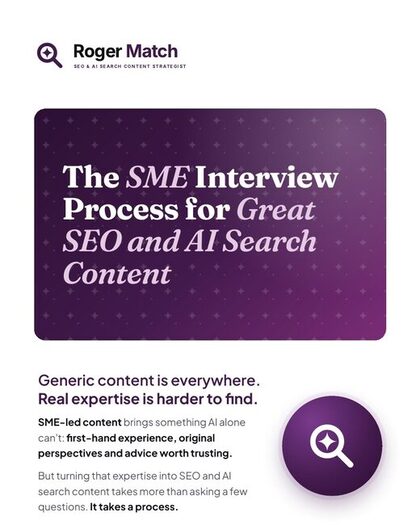
The PDF breaks down every stage with checklists and examples.
Download the free PDFWhere this fits in a bigger content strategy
SME interviews are one of the ways I make content hard to copy. They pair really well with turning case studies into search content and with building listicles that explain how every option was chosen. If you want to see how I plan this kind of work for a brand, here's what I do.