
I've built content update workflows with Claude, Codex and artifacts. They make the work much faster, but a batch of 100 articles is still 100 different editorial decisions.
Each article has its own intent, history and business purpose. Some need a few corrections. Others need a completely different approach. And some are already doing their job!
So before you update anything, decide what needs to change and why 😀
Why updating content is worth getting right
Updating old content can pay off. When HubSpot optimized old blog posts, it increased their monthly organic search views by an average of 106%.
But more changes aren't always better. Google recommends avoiding radical changes if your page is already performing well. Freshness also depends on the query: Google's ranking systems guide explains that its freshness systems show fresher content where people expect it. And for Google's AI features, the same SEO foundations apply.
Start with the individual page
A traffic dip deserves investigation before it becomes a rewrite assignment. I always check for changes in demand, seasonality and technical issues alongside content quality. Then I look at four things:
- Reader intent: does the article still answer the question people arrive with?
- Accuracy and positioning: does it reflect current facts, products, offers and messaging?
- Business contribution: does it support visits, leads, sales conversations or customer education?
- Existing value: which insights, backlinks and useful sections should be preserved?
The four buckets
1Refresh: the foundation still works
I choose a refresh when the article's purpose and structure are still useful, but specific parts need attention. Think outdated stats, product or pricing details, messaging or dated screenshots.
2Rewrite: the topic matters, but the approach is outdated
A rewrite fits when the topic is still valuable but the article relies on old ideas, the reader's intent has shifted or the structure doesn't work anymore. Age alone doesn't justify a rewrite 🙂
3Merge: two pages answer the same question
I consider merging when articles serve basically the same intent and their best material would make one stronger resource. Two pages showing up in search isn't, by itself, a reason to combine them. Always plan the destination URL, keep the useful evidence and update internal links.
4Leave it alone: it's already doing its job
This one is underrated. Low traffic alone doesn't make a page unsuccessful. If it's accurate, supports business goals, serves a narrow but valuable audience, earns backlinks or helps sales and support, I keep monitoring it and leave it be.
+Bonus: sometimes the better answer is a new article
A piece from 2020 can document a useful perspective on an industry before AI changed it. Rewriting it as a current guide could erase the history that makes it valuable. In that case I keep the original clearly dated, publish a new article for the new intent and connect the two.
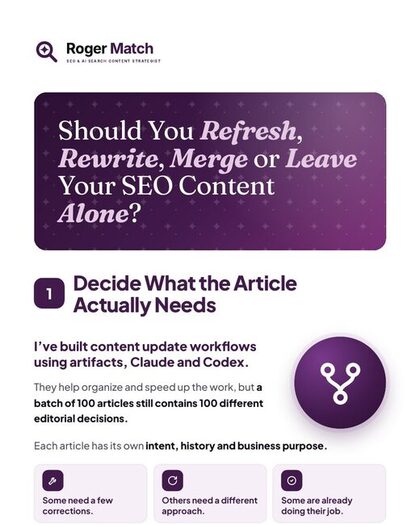
The PDF includes the full decision table so you can make the call quickly for every page.
Download the free PDFHow this fits into my content work
Deciding what each page needs is a big part of my SEO content management and AI-powered content workflows. It's also how I keep listicles accurate over time, and it often reveals new opportunities, like turning existing case studies into search content.